Lighting · Materials · Rendering
Lighting and
Rendering Studies
A Maya study exploring how color, exposure, materials, and different renderers change the mood and readability of one scene.
Project overview
One scene, several ways to shape the light.
I used the same collection of objects to study lighting, materials, reflections, shadows, and render settings. Working through multiple versions made it easier to see how each decision changed the mood of the scene and the way the materials appeared.
Scene setup
Building a controlled space for comparison.
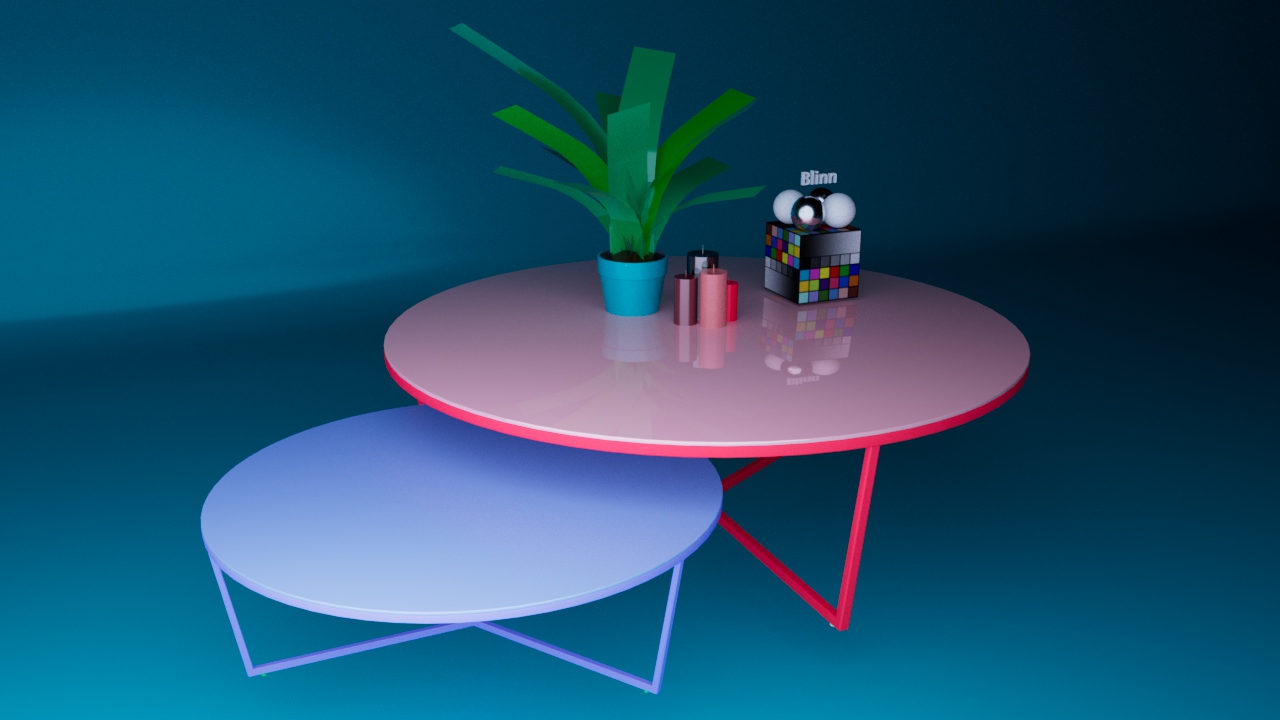
I arranged the sourced models into a still-life scene with layered tables, plants, candles, reflective objects, and a color chart. Keeping the main composition consistent gave me a clear way to compare lighting and rendering changes.
Lighting development
Testing composition, color, and exposure.
The closer view focuses on the material response and reflections. The low-light version pushes the same scene toward darkness to test how much information remains visible with limited illumination.
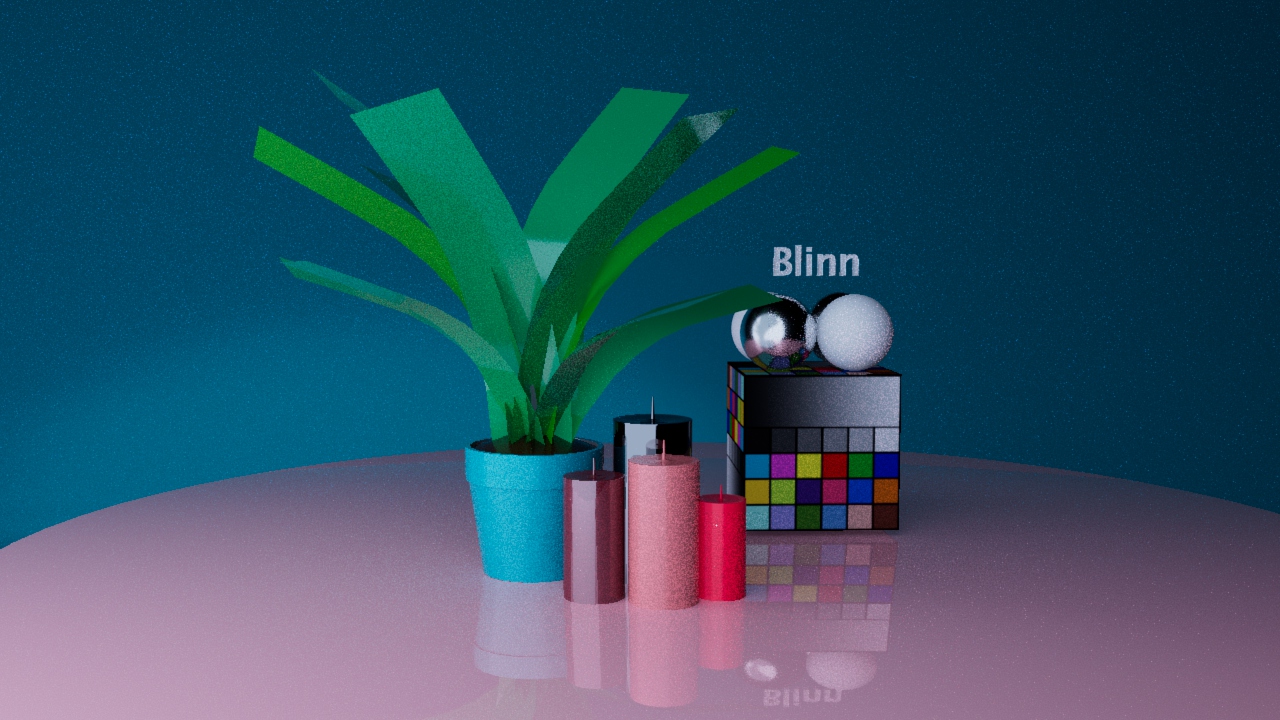
A closer view of the candles, plant, color chart, reflections, and colored light.
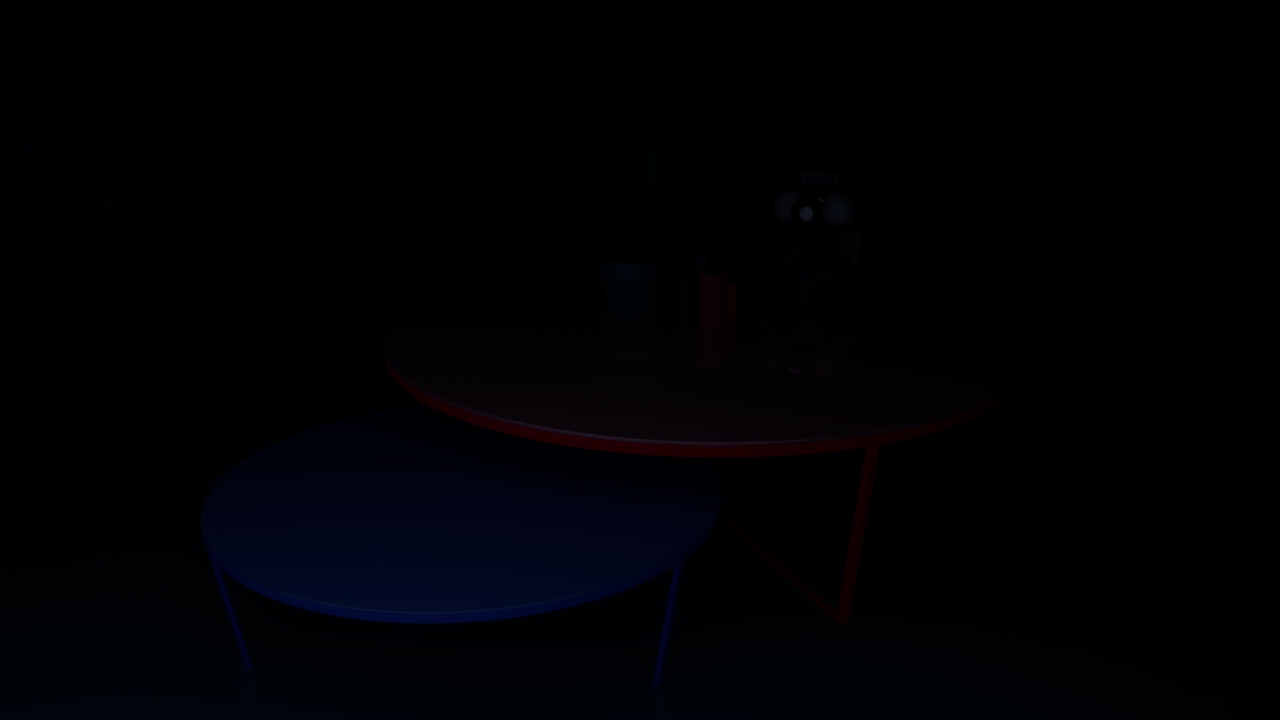
An exposure test focused on silhouettes, subtle color, and the minimum light needed to define the scene.
Renderer and material comparison
Watching the same light behave differently.
I tested Arnold, Maya, and Redshift versions to compare material response, highlight strength, shadow quality, reflections, noise, and render time.
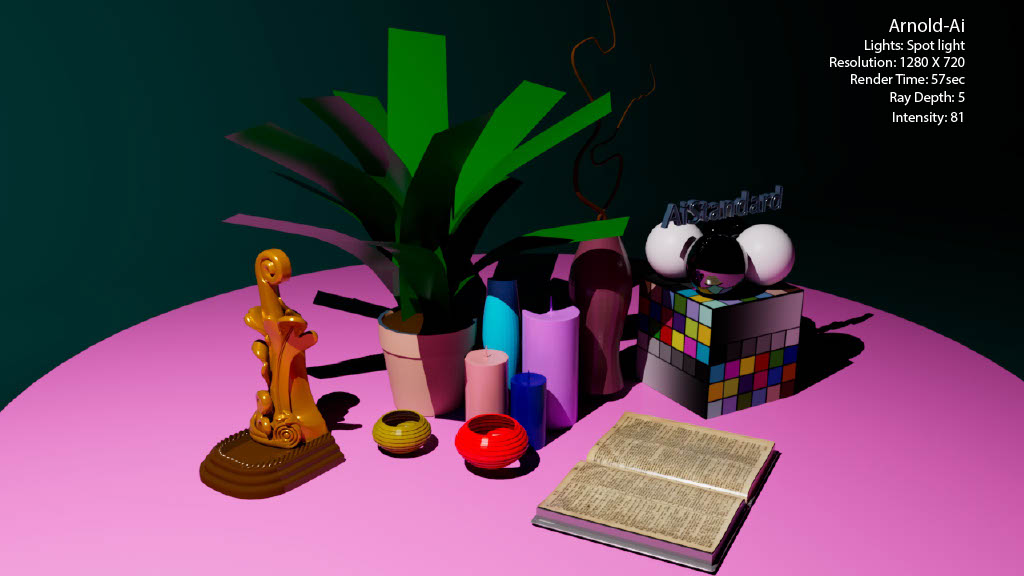
A direct-lighting test rendered with Arnold and an AI Standard material setup.
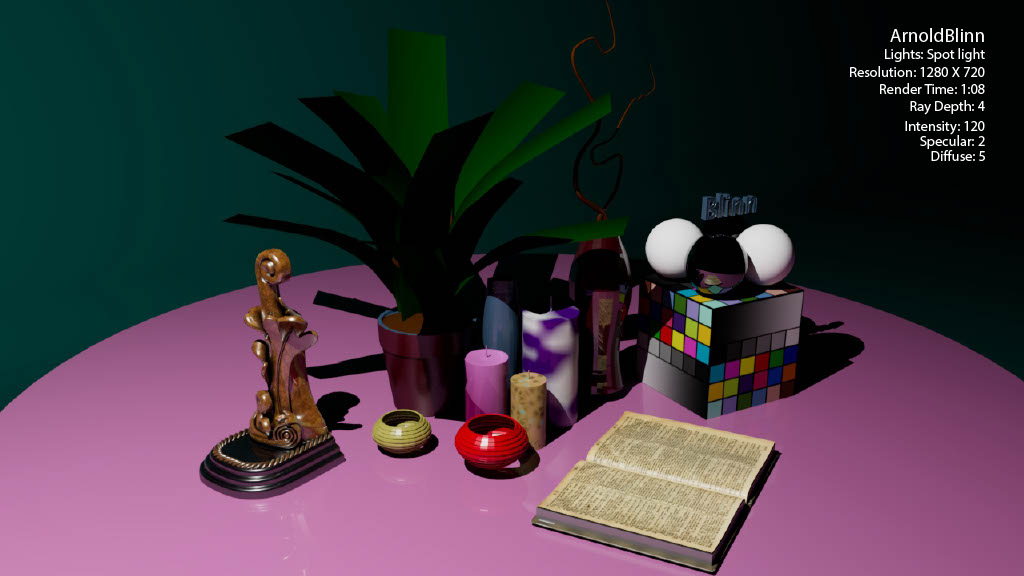
The same scene rendered through Arnold with Blinn materials for a different surface response.
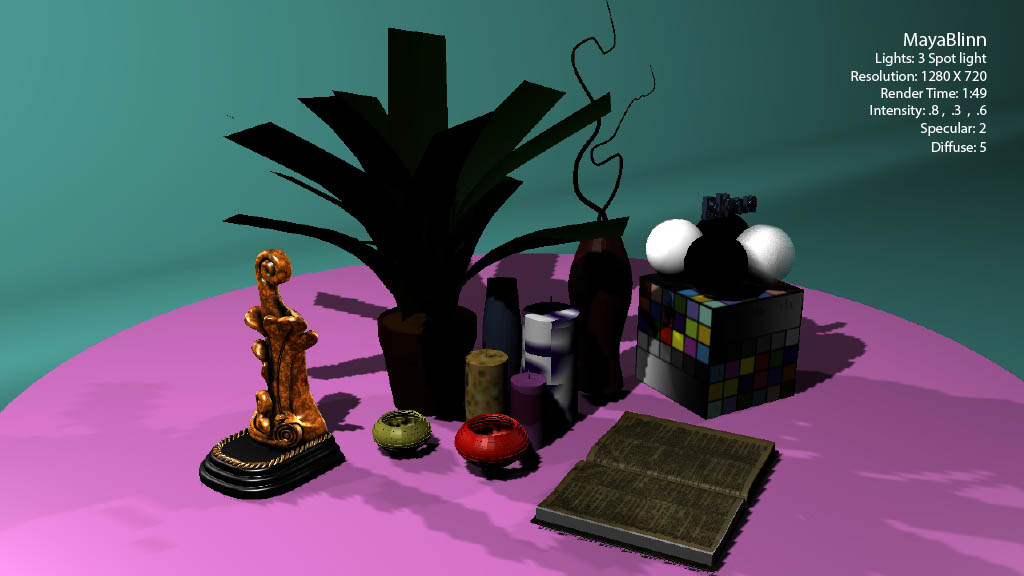
A Maya Blinn version used to compare highlights, shadows, reflections, and render time.
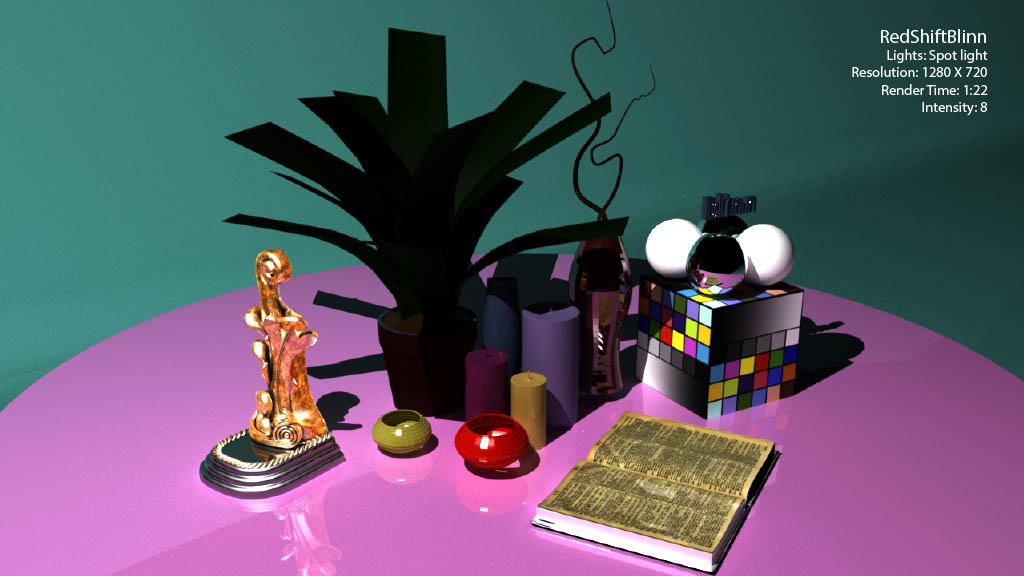
A Redshift comparison showing how the lighting and Blinn surfaces respond in another renderer.
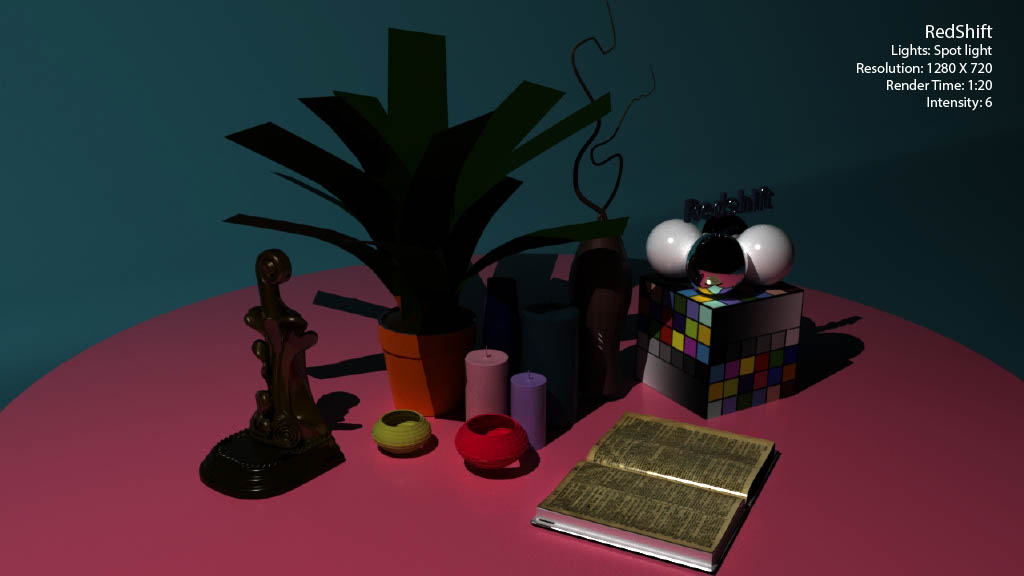
A final Redshift lighting test with stronger contrast and a darker overall mood.
Project credit
My contribution
The models in these studies were found online. I assembled the scene and completed the lighting and rendering in Autodesk Maya, using Arnold and Redshift to test different materials, moods, and final results.